


Simple Breathing Techniques Teachers Can Use in the Classroom
Key Takeaways
Key Takeaways
-
Instant De-escalation: Mindful breathing activates the parasympathetic nervous system, helping to lower heart rates and reduce cortisol levels during stressful classroom moments.
-
Co-Regulation: When a teacher models calm breathing, it helps students regulate their own emotions through a process called co-regulation.
-
Accessible Mindfulness: These techniques require no equipment and can be integrated into daily transitions in 60 seconds or less.
6 Simple Breathing Techniques for the Classroom
1. The 4-7-8 Technique
Popularized by Dr. Andrew Weil, this method acts as a "natural tranquilizer" for the nervous system.
-
- How to do it: Inhale quietly through your nose for 4 seconds, hold for 7 seconds, and exhale forcefully through your mouth for 8 seconds.
- Best for: Teachers to use before a class begins or after a chaotic transition.
2. Box Breathing (Square Breathing)
Used by high-performance athletes and Navy SEALs, this technique restores focus and emotional balance.
-
- How to do it: Inhale for 4, hold for 4, exhale for 4, and pause for 4.
- Pro-tip: Encourage students to "draw" a square in the air with their finger as they breathe to add a tactile element.
3. Belly Breathing (Diaphragmatic Breathing)
Stress causes shallow chest breathing. Belly breathing shifts the body back into a relaxation response.
-
- How to do it: Place one hand on your stomach. Inhale deeply so your hand rises, then exhale slowly so it falls.
- Best for: Grounding students after recess or during a high-stakes testing period.
4. Five-Finger Breathing
This tactile exercise is a favorite in our Mental Health Recharge toolkit because it engages multiple senses.
-
- How to do it: Trace the outline of your hand with your index finger. Inhale as you trace up a finger and exhale as you trace down.
5. Lion’s Breath
This yoga-based technique is excellent for releasing facial tension and lightening the classroom mood.
-
- How to do it: Inhale deeply, then open your mouth wide, stick out your tongue, and exhale with a loud "ha" sound.
- Best for: Breaking the tension before a presentation or after a long period of sitting.
6. Alternate Nostril Breathing
This ancient technique balances the left and right hemispheres of the brain, promoting mental clarity.
-
- How to do it: Close your right nostril and inhale left. Switch and exhale right. Inhale right, then switch and exhale left.
- Best for: A midday reset during a teacher's lunch break or planning period.
Building a Culture of Care with Erika’s Lighthouse
Creating moments of calm is a foundational step in building a supportive school culture. Erika's Lighthouse provides several free resources to help educators bring these practices to life:
-
- Mental Health Recharge: We offer 5-minute, evidence-based classroom activities—including several of the breathing exercises above—to help students and teachers reset during the day.
- Teen Toolbox: Our self-guided Teen Toolbox includes a "Self-Care" section where students can explore breathing and grounding techniques on their own.
- Policy & Staff Training: We provide professional development resources to help school leaders prioritize staff wellness, ensuring teachers have the "oxygen" they need to support their students.
By normalizing these small acts of self-care, we create environments where mental health is openly discussed, and no young person (or educator) feels alone.
FAQs
Frequently Asked Questions
Q: How do I introduce breathing exercises without it feeling "cheesy" to older students?
A: Frame it as a "brain hack" used by elite performers like pilots and athletes. Using the Box Breathing technique is particularly effective here, as it is a recognized tool for high-stakes performance.
Q: Can these techniques help a student during a panic attack?
A: Yes, especially Belly Breathing and Five-Finger Breathing. However, if a student is frequently experiencing crisis-level anxiety, we recommend using our Family Workbook to help bridge the conversation between the school and the parents to seek professional support.
Q: Are there free videos or guides I can play for my class?
A: Absolutely! Erika’s Lighthouse offers a suite of Schoolwide Campaigns and Classroom Education videos that include guided recharges and mental health lessons designed for grades 4-12
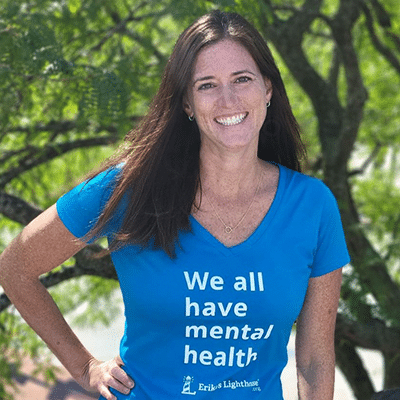
Katie Conklin
Vice President of ProgramsKatie joined Erika’s Lighthouse in August 2021. She has a Master’s degree in Human Services and Counseling from DePaul University. Katie has over 20 years of experience working in ...
Learn more about Katie...