


What Are the Main Differences Between Top School Mental Health Programs?
Key Takeaways
- Diverse Prevention Models: Schools evaluating mental health programs will find established options in Signs of Suicide (classroom screening), Sources of Strength (peer resilience), and Erika’s Lighthouse (universal mental health literacy).
- Varying Student Experiences: Signs of Suicide (SOS) utilizes the ACT® framework with a depression screener, Sources of Strength leverages Peer Leaders and messaging campaigns, and Erika’s Lighthouse uses real teen stories across a Four Pillar Model.
- Grade-Level Availability: SOS targets middle and high school students; Sources of Strength provides elementary and secondary models; and Erika’s Lighthouse offers a full K–12 suite.
- Distinct Cost Structures: SOS requires a $500 annual building fee, Sources of Strength ranges from $750 to $6,000 based on implementation, and all Erika’s Lighthouse resources are 100% free.
Selecting the right youth mental health program is one of the most critical decisions K–12 administrators, school social workers, and counseling teams make. With adolescent mental health concerns remaining a top priority for district leaders, schools need evidence-informed programs that build long-term resilience, increase help-seeking behaviors, and reduce stigma without overburdening school budgets or classroom teachers.
Three of the most widely implemented school-based mental health programs in the United States are Signs of Suicide (SOS), Sources of Strength, and Erika’s Lighthouse.
While all three share the overarching goal of protecting youth mental health, their foundational approaches, core philosophies, staffing requirements, and pricing models differ. This guide provides an objective, side-by-side comparison to help school district leaders choose the best fit for their community.
How Do Signs of Suicide, Sources of Strength, and Erika's Lighthouse Differ?
The three programs take different approaches to school-based mental health and suicide prevention.
Signs of Suicide focuses on suicide prevention education, the ACT framework, and a brief depression screen. Sources of Strength uses an upstream, peer-led model centered on protective factors, connection, help-seeking, and positive culture. Erika’s Lighthouse provides skills-based mental health education through a broader Four Pillar Model that includes classroom education, student empowerment, family engagement, and staff and policy support. This whole school approach connects mental health education with support beyond the classroom.
These differences are best understood as differences in program design and emphasis, rather than as a simple progression from one level of prevention to another.
How Does Each Program Approach Prevention and Mental Health Education?
Signs of Suicide
Signs of Suicide (SOS) is an evidence-based youth suicide prevention program for middle and high school classrooms. Its ACT® framework—Acknowledge, Care, Tell—teaches students how to recognize signs of depression and suicide risk and how to seek help for themselves or a friend.
The program is designed to be taught in a single class period and includes facilitation guidance, classroom discussion prompts, modeled scenarios, and a brief depression screen.
Sources of Strength
Sources of Strength uses a strength-based, upstream prevention model centered on protective factors like connection, belonging, help-seeking, resilience, and healthy coping. The program begins in elementary school with classroom curricula focused on emotional regulation, coping skills, and brain and body science.
In secondary grades, it transitions into a peer-led movement where trained student Peer Leaders and Adult Advisors lead schoolwide messaging campaigns to promote a positive culture shift. Sources of Strength also supports collaboration with other community and school initiatives.
Erika’s Lighthouse
Erika's Lighthouse provides skills-based mental health education designed to help students recognize signs and symptoms of depression, practice positive coping and help-seeking skills, and identify trusted adults. Our approach is grounded in the belief that mental health education should give students practical skills they can use in their everyday lives.
Its programs take a peer-to-peer approach using real teens and real stories, organized around a Four Pillar Model: Classroom Education, Empowerment Clubs, Family Engagement, and Policy & Staff Training. Erika's Lighthouse offers a full suite of Tier-1 programs and provides all resources at no cost to educators. By combining these four pillars, Erika’s Lighthouse gives schools multiple ways to make mental health education part of the broader school experience, not just a single classroom lesson.
How Do the Programs Support Student Help-Seeking?
The three programs use different tools and approaches to encourage students to seek support.
Signs of Suicide
SOS teaches students to recognize signs of depression and suicide risk and use the ACT framework to seek help for themselves or a friend.
Its classroom curriculum also uses a brief depression screen that assesses for depression and potential suicidal thoughts. Schools use their own established procedures to follow up with students who screen positive.
Sources of Strength
Sources of Strength incorporates help-seeking into its broader upstream approach. Peer leaders and adult advisors work together on strategic messaging campaigns designed to strengthen protective factors, promote connection, and encourage young people to seek help when they or someone they know is struggling.
Erika’s Lighthouse
Erika’s Lighthouse delivers a comprehensive, Tier 1 mental health curriculum across grades K–12. Its flexible, video-based classroom programs cover depression education, suicide awareness, anxiety, stress management, digital wellness, and positive coping strategies using real stories from teens to make mental health topics relatable and accessible.
We also recognize that knowing when and how to ask for help is an important part of mental health education.To facilitate help-seeking, classroom sessions incorporate optional Self-Referral Cards. These give students a private, low-barrier way to request to speak with a mental health professional for themselves or express concern for a peer. Schools integrate these cards into their existing support workflows, establishing a direct connection between classroom learning and school-based interventions.
What Grade Levels Do These Programs Serve?
| Program | Grade Levels / Model |
| Signs of Suicide | Middle and high school |
| Sources of Strength | Elementary and secondary models |
| Erika’s Lighthouse | K–12 |
SOS currently offers separate middle and high school student programs.
Sources of Strength offers an elementary curriculum and a secondary program for middle and high school students.
Erika’s Lighthouse provides free K–12 mental health curriculum, including classroom education and programming across its Four Pillar Model.This K-12 approach allows schools to build mental health education over time rather than treating it as a single grade-level or one-time intervention.
How Much Do Signs of Suicide, Sources of Strength, and Erika’s Lighthouse Cost?
Program pricing can change, so schools should confirm current pricing directly with each organization.
Signs of Suicide
SOS currently lists an annual license of $500 per school building for its middle and high school programs.[Current SOS pricing]
Sources of Strength
Sources of Strength's pricing varies depending on the program and implementation model. [Current Sources of Strength pricing]
For its secondary program, the organization currently lists $6,000 for standard program implementation and training with a member of its National Training team. That includes one school year of licensing, implementation support, Adult Advisor training, Peer Leader training, materials, and technical support.
Sources of Strength also lists a $750 annual licensing fee for schools implementing the program with a Local Certified Trainer or sustaining the program after previous training, depending on the implementation model.
Elementary pricing follows a different structure, including $750 per grade level and separate training costs.
Erika’s Lighthouse
Erika’s Lighthouse programs and resources are available at no cost to schools and educators. [Erika’s Lighthouse pricing and program comparison]
All Erika’s Lighthouse programs and resources are available at no cost, including classroom curricula, Empowerment Club resources, family resources, staff training, and other mental health resources. Erika’s Lighthouse also offers up to $500 per year in activity grants for Empowerment Clubs.
How Are the Programs Implemented?
Signs of Suicide: Classroom-Based Implementation
SOS is designed to be taught in a single class period and provides facilitation guidance, classroom discussion prompts, videos, and a brief depression screen. Schools incorporate the program into their existing student support procedures and determine appropriate follow-up for students who screen positive.
Sources of Strength: Peer Leadership and Adult Advisors
Sources of Strength's secondary model involves training Peer Leaders and Adult Advisors, followed by ongoing strategic messaging campaigns.
The organization's implementation cycle includes Peer Leader training, Adult Advisor training, regular team meetings, messaging campaigns, and ongoing evaluation and recruitment.
Erika’s Lighthouse: Four Pillars and Flexible Resources
Erika’s Lighthouse uses an educate-the-educator model with ready-to-use curriculum, implementation resources, and personalized support.
Its classroom curricula can be adapted to different school settings and include one-to-four-day lesson options. Beyond classroom education, schools can implement Empowerment Clubs, Family Engagement resources, and Policy & Staff Training.
Erika’s Lighthouse also offers unlimited one-on-one implementation support at no cost.
What Should Schools Consider When Comparing These Programs?
- Primary focus: Is the school looking for suicide prevention education, peer-led protective-factor programming, mental health education, or a combination?
- Student experience: Does the program primarily use classroom instruction, peer leadership, student campaigns, or student empowerment activities?
- Help-seeking approach: Does the program use a depression screen, peer-led messaging, Self-Referral Cards, or other help-seeking tools?
- Grade levels: Does the school need a middle and high school program, an elementary model, or K–12 resources?
- Family and staff engagement: What resources are available beyond the student classroom experience?
- Implementation model: What training, staffing, ongoing participation, or schoolwide coordination does the program involve?
- Cost: What licensing, training, and ongoing costs are associated with implementation?
- Existing school supports: How does the program connect with the school's existing counseling, wellness, prevention, and mental health systems?
Considering these factors can help schools understand how different programs may fit within their broader mental health strategy.
Side-by-Side Comparison: Signs of Suicide vs. Sources of Strength vs. Erika’s Lighthouse
| Feature | Signs of Suicide | Sources of Strength | Erika’s Lighthouse |
| Primary approach | Suicide prevention education | Strength-based, upstream approach | Skills-based mental health education, upstream approach to suicide prevention |
| Core student component | ACT framework and brief depression screen | Peer Leaders and strategic messaging | Classroom Education and Empowerment Clubs |
| Help-seeking | Students learn to seek help for themselves or a friend | Peer-led messaging promotes help-seeking | Self-Referral Cards and help-seeking skills |
| Screening | Brief depression screen | No formal screening instrument in the secondary peer-leader model | No screening instrument; optional Self-Referral Cards |
| Grade levels | Middle & high school | Elementary & secondary models | K–12 |
| Student leadership | Classroom-based | Peer Leaders | Empowerment Clubs |
| Adult involvement | Classroom facilitators and school support staff | Adult Advisors | Policy & Staff Training. Facilitators to teach the program |
| Family engagement | Family resources | Protective-factor approach and community engagement resources | Dedicated Family Engagement pillar |
| Schoolwide culture | Suicide prevention education | Peer-led messaging and positive culture change | Four Pillar Model and schoolwide supports |
| Cost | $500/building/year | Varies by implementation and training model | Free |
| Implementation support | Facilitation guidance and program resources | Training and ongoing support | Personalized one-on-one support and implementation resources |
Can Schools Use These Programs Together?
Yes. Schools may use different programs or resources as components of a broader mental health strategy, depending on their existing programming and needs.
Sources of Strength explicitly describes collaboration with other programs and community initiatives as part of its approach.
Erika’s Lighthouse offers a broader suite of programs and resources that schools can use across classroom education, student empowerment, family engagement, and staff and policy support.
For example, a school may use one program for classroom-based suicide prevention education while using additional resources for student leadership, family engagement, or schoolwide mental health education.
The key consideration is how the programs fit together within the school's existing prevention, mental health, and student support systems.
Explore Free Resources for Your District
- Compare Options: Review the complete Program Comparison & Pricing Overview to see how features stack up.
- Preview Erika Lighthouse Curricula: Register for Free Access to review classroom modules, staff training, and portal resources.
- Assess Readiness: Explore the Erika's Lighthouse Data Center to evaluate your building or district needs.
- Schedule a Consultation: Contact Our Team to discuss custom district rollout plans.
FAQs
Frequently Asked Questions
Can Erika's Lighthouse be used alongside Signs of Suicide or Sources of Strength?
Yes. Erika's Lighthouse programs are flexible. If a school uses Signs of Suicide for clinical screening or Sources of Strength for peer leadership, they can still utilize Erika's Lighthouse for free Empowerment Clubs, Family Engagement, or Staff Training to build an inclusive culture.
What is the difference between a depression screener and a self-referral tool?
A depression screener (used by SOS) is a brief assessment tool designed to identify students experiencing symptoms of depression or suicide risk, requiring immediate school counselor follow-up for positive screens. A self-referral tool (like Erika’s Lighthouse Self-Referral Cards) focuses on student agency, providing a private, low-barrier way for students to voluntarily request support from a trusted school adult without conducting a formal clinical assessment.
Is there a waiting list to access Erika's Lighthouse resources or support?
No. There is no waiting list. Erika's Lighthouse uses an "educate-the-educator" model, providing immediate portal access and free 1-on-1 support to local school professionals upon registration.
How is Erika's Lighthouse able to offer its curriculum for free?
Erika’s Lighthouse has remained 100% free for over 20 years through donor funding. The organization operates under the core belief that cost should never prevent a student or school from accessing life-saving mental health education.
Is Erika's Lighthouse listed on national evidence-based registries?
Yes. Erika’s Lighthouse and Levels II: Depression Awareness and Level III: Depression Education & Suicide Awareness classroom programs and staff training are listed on the Suicide Prevention Resource Center (SPRC) Best Practices Registry, and its classroom curricula align with ESSA Tier 2 evidence standards and national health education benchmarks.
Does Erika's Lighthouse require licensed mental health professionals to teach the lessons?
No. Erika’s Lighthouse classroom programs are specifically designed for general education teachers, health educators, or counselors to facilitate comfortably using turnkey, pre-scripted video modules.
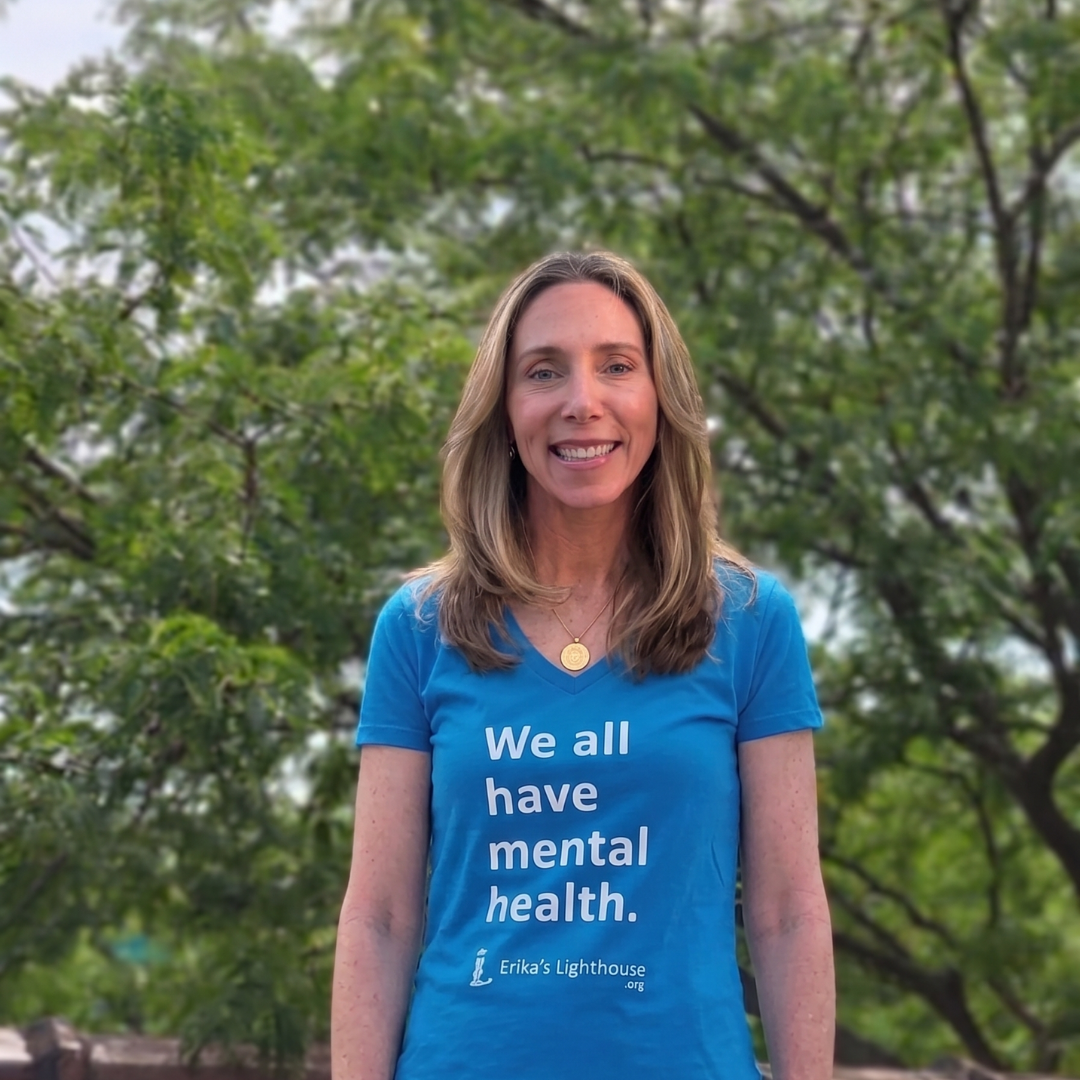
Maggie O'Brien
Marketing ManagerMaggie joined Erika’s Lighthouse in April 2026, bringing over 15 years of marketing experience, including a decade in K-12 education. She is passionate about raising awareness of a...
Learn more about Maggie...