

Invest in the Upstream Approach to Youth Mental Health
The youth mental health crisis cannot be solved by treatment alone. Erika’s Lighthouse builds the foundation that comes first: a generation that knows the signs, talks openly about mental health, and knows how and when to ask for help.
1.7M+ Students Reached in 2025-26 | 100% Free | 50 States
We Can't Treat Our Way Out of the Youth Mental Health Crisis
Professional mental health care is essential, but clinical treatment alone cannot keep pace with the scale of the need.
53%
Treatment Takes Time
130M+
Provider Shortages
Erika's Lighthouse works upstream, equipping young people with the skills to take care of their mental health, the knowledge to identify early signs in themselves or peers, and the confidence to seek support from a trusted adult before a crisis occurs.
How Our Theory of Change Creates Broader Social Change
Our theory of change starts with a simple premise:
When young people, families, and trusted adults share the knowledge and language to talk about mental health, the conditions for earlier help-seeking and stronger support change.
Universal Education
Every student develops mental health knowledge, skills, and vocabulary.
Open Conversations
Shared language makes mental health easier to discuss and reduces stigma.
Trusted Adults
Students know who they can turn to, while adults are better prepared to respond.
Earlier Help
Warning signs are recognized and addressed before challenges escalate.
Better Outcomes
Early intervention works better and lasts longer.
A Mentally Healthy Generation
Young people carry these skills into adulthood, families, workplaces, and communities.
Where Our Work Aligns With Foundation Priorities
Youth mental health touches many foundation priorities. Here’s where our work fits yours.
Prevention & Behavioral Health
Universal, evidence-based mental health education reaches students before a crisis. With federal projections showing clinician shortages worsening over the next decade, school-based prevention is vital. Depression education is suicide prevention, and trained educators ensure students have approachable trusted adults to turn to before issues escalate.
Health Equity & Access
Our programs are 100% free to schools, removing cost as a barrier to comprehensive youth mental health education. Because roughly 60% of youth who receive mental health support get it at school (SAMHSA), meeting students where they already are is essential. Fully available in English and Spanish, our resources reach Title I, rural, urban, and suburban communities where access to clinical care is most limited.
Education & Community Well-Being
Mental health education becomes part of the school environment, while family resources extend mental health conversations beyond the classroom and into the home.
Research, Data & Innovation
Our Data Center creates a national data set on student mental health, connectedness, help-seeking, and school culture, helping us evaluate outcomes and continuously strengthen our model.
Systems Change for Less Than $2 a Student
We don't build a new system around young people. We strengthen the systems they already walk into every day.
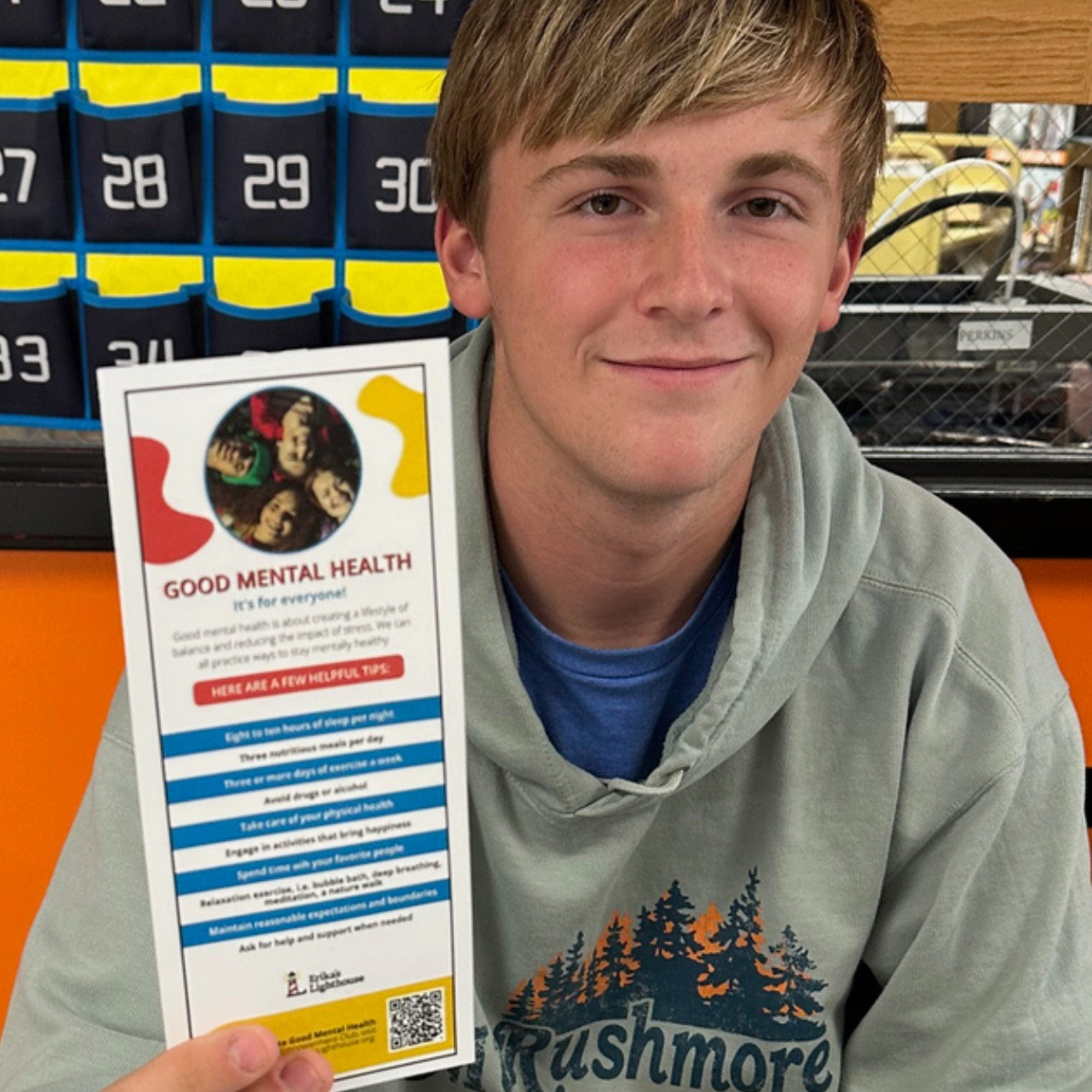
Our educate-the-educator model trains the teachers, counselors, and families already around students, so one investment reaches whole school communities.
-
Turnkey & Ready to Deploy: Our educate-the-educator model requires zero technical integration or administrative lift.
- Scalable Nationwide: Built for immediate expansion, training educators in one school or one school district impacts hundreds–and even thousands– of K–12 students each year.
- Sustainable Impact: Resources stay embedded in school communities year after year—with zero recurring costs.
Proof the Theory Works
A theory of change is only as strong as the evidence behind it.
Reach 2.5 Million Students Each School Year
We have demonstrated that a free national model works. Now we’re scaling it. Foundation grants directly sustain and scale our work, supporting our flexible 4-Pillar Model and driving broad impact across three primary areas:
REACH
Expand free mental health education to more students and schools, including communities with fewer resources.
KNOWLEDGE
Build the evidence base for youth mental health prevention, culminating in our annual research report.
INNOVATION
Use AI tools to turn our survey data into step-by-step actions for schools, and tailor our curriculum for hard-to-reach rural, tribal, and Title I schools.
Help Build a Mentally Healthy Generation
Let's Talk About What We Can Build Together
If your foundation is investing in youth mental health, prevention, health equity, education, family well-being, research, or systems change, we would welcome the opportunity to explore how Erika’s Lighthouse can advance your goals.
Complete the form and we will be in touch soon or email Cheryl Sundheim, Annual Fund Director directly at Cheryl@ErikasLighthouse.org.
Looking for Corporate Sponsorships or CSR Partnerships? Explore our Corporate Partnerships page.
FAQs
1. How can we address the youth mental health crisis at scale?
Addressing the youth mental health crisis at scale requires embedding universal prevention programs into existing K–12 school systems rather than relying solely on individual clinical care.
Through an educate-the-educator model, Erika’s Lighthouse trains existing school staff, counselors, and student leaders—delivering cost-effective, systemic impact across entire student bodies for less than $2 per student.
2. Why is universal (Tier-1) mental health education critical for suicide prevention?
Universal Tier-1 education works upstream by teaching 100% of students to recognize early warning signs of depression and seek help before a mental health crisis occurs.
With over 130 million Americans living in health shortage areas, clinical treatment alone cannot keep pace. Universal school-based education bridges this gap by turning depression awareness directly into suicide prevention.
3. What is the most effective way to normalize conversations about depression in schools?
The most effective way to normalize mental health conversations is through student-led initiatives, peer-to-peer engagement, and a shared, school-wide vocabulary.
By equipping peer Empowerment Clubs and training trusted adults, Erika’s Lighthouse replaces stigma with empathy, creating an environment where asking for help becomes a normal part of school culture.
4. How does Erika’s Lighthouse address equity gaps in under-resourced communities?
Erika’s Lighthouse eliminates financial and structural access barriers by providing 100% free, turnkey, bilingual (English/Spanish) mental health programming to K–12 schools anywhere.
Because nearly 60% of youth who receive mental health support get it at school, keeping programs entirely free ensures zip code and school budgets never restrict access for Title I, rural, or urban districts.
5. What evidence and data demonstrate the impact of your school-based model?
Erika’s Lighthouse programs meet ESSA Tier 2 evidence standards and are listed on the Suicide Prevention Resource Center (SPRC) Best Practices Registry.
Backed by over 160,000 annual pre- and post-curriculum student surveys from our national Data Center, our programs drive a 11% increase in students identifying a trusted adult and leave 91% confident in caring for their mental health.
6. How does your model ensure long-term, self-sustaining impact after a grant ends?
Our model builds permanent capacity within school systems, being completely free of charge to anyone or any school who uses our programs, there are zero recurring software fees, licensing costs, or outside clinical staffing.
By embedding our 4-Pillar Model into internal staff training and school culture, a single foundation grant creates a self-sustaining infrastructure that continues educating new student cohorts year after year.