

How a Self-Referral Card Gave One Middle School Student the Words to Ask for Help
Cassie Brooks had spent years teaching middle school health in Brownsburg, Indiana, knowing her students desperately wanted to talk about depression and mental health. What she needed was a safe, evidence-informed framework to start those complex conversations.
Today, Erika’s Lighthouse classroom education provides Cassie and her students with a shared vocabulary to discuss mental health openly, recognize warning signs, and connect with trusted adults before a crisis escalates.
For one seventh grader, that simple opportunity to ask for help made a life-saving difference
Impact At A Glance
- 25 Years in Education. Cassie brings decades of experience teaching health and physical education
- Grades 7-8 Integration. Erika's lighthouse classroom education became part of Cassie's middle school health curriculum.
- 1 Life-Saving Intervention. A student utilized a Self-Referral Card to privately ask for immediate help during a silent crisis.
- Free for Schools. Evidence-informed, Tier-1 youth mental health resources provided at zero cost.
Why Mental Health Education Matters in Middle School
Throughout her career, Cassie understood the critical importance of listening to her students and responding to their emotional needs.
Again and again, students brought up heavy topics: depression, managing stress, and wanting to support friends who were struggling. But those conversations were fraught with difficulty. Students carried deep stigmas and negative judgments about mental health, and Cassie realized that good intentions alone weren't enough. She needed a structured, clinically safe framework to guide classroom discussions around depression and suicide without fear of unintended consequences.
Referring individual students to a school counselor was vital, but Cassie wanted a proactive, universal approach—one that reached every single student in the classroom long before a crisis occurred.
A Curriculum that Gave Her the Right Words
In 2019, Cassie attended an Indiana Society for Health and Physical Educators (INSHAPE) conference where she was introduced to Erika's lighthouse. She immediately recognized the value of its peer-to-peer video formats, structured educator talking points, and flexible lesson plans.
Cassie incorporated Erika's Lighthouse’s free Tier 1 classroom education into her 7th and 8th grade health curriculum. The lessons provided age-appropriate language that normalized mental health discussions, encouraging students to compare emotional pain to physical pain—like a headache or a broken bone—to help them understand that asking for help is a normal, healthy choice.
Crucially, the curriculum included a simple, discreet tool: Self-Referral Cards. At the end of each lesson, every student filled out a card, giving them a private channel to indicate if they needed to speak with a mental health professional.
"I wanted to lean into these challenging topics, but I needed a comprehensive, evidence-informed tool that established safety for everyone in the room."
— Cassie Brooks, Health & Physical Education Teacher
What the Self-Referral Card Revealed
During one standard lesson, a single Self-Referral Card uncovered a crisis that no one at school had seen coming
A high-achieving, active student who always appeared happy, positive, and well-adjusted checked the box indicating he wanted to speak with a counselor within 24 hours. Neither Cassie nor the school counselor had any reason to suspect he was struggling.
When the counselor met with him, they discovered the student was experiencing a severe mental health crisis and had active suicide plans for the following month. He confessed that he felt he "had no reason to feel the way he felt" because his life seemed good from the outside.
The classroom lesson normalized his experience, and the private card gave him the safety net he needed to break his silence. He was immediately connected with professional support and family care.
.png)
Building a Culture Where Students Can Ask for Help
The impact of the curriculum extends far beyond that single afternoon. Cassie continues to see a profound cultural shift in how her students communicate, practice coping strategies, and support one another.
Through Erika’s Lighthouse, students learn to recognize the signs of depression, challenge social stigmas, utilize resilience techniques, and identify trusted adults in their school and community.
Her experience also reflects the expertise she has built over 25 years as a middle school educator. Cassie was named SHAPE America Midwest Health Teacher of the Year in 2018, served as president of Indiana SHAPE and volunteers as a Professional Community Ambassador for Erika's lighthouse.
Today, she shares her experience with other educators to help more schools create environments where students know how to talk about their mental health, and where they have the words to ask for help.
Listen to Cassie on the Raising Resilient Kids Podcast.
“That self-referral card saved his life. I truly believe it.”
— Cassie Brooks, Health & Physical Education Teacher
Bring Mental Health Education to Your School
Every student deserves the words to recognize what they are feeling, support a friend, and reach out to a trusted adult when they need help.
Erika's Lighthouse provides free, evidence informed mental health education resources designed to help schools build supportive cultures and give students the words to ask for help.
Explore Erika's Lighthouse’s Classroom Education
- State: Indiana
- Module(s) Used: Depression and Suicide
- Pillar(s) Used: Classroom Education
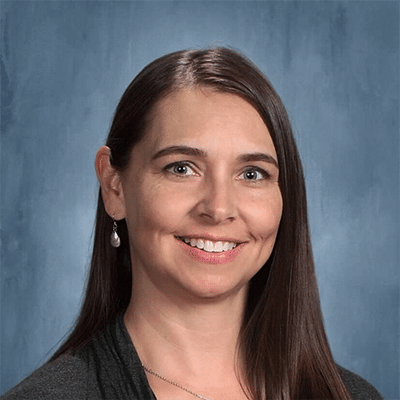
Cassie Brooks
Health & Physical Education Teacher
Perspective: Health Educator