

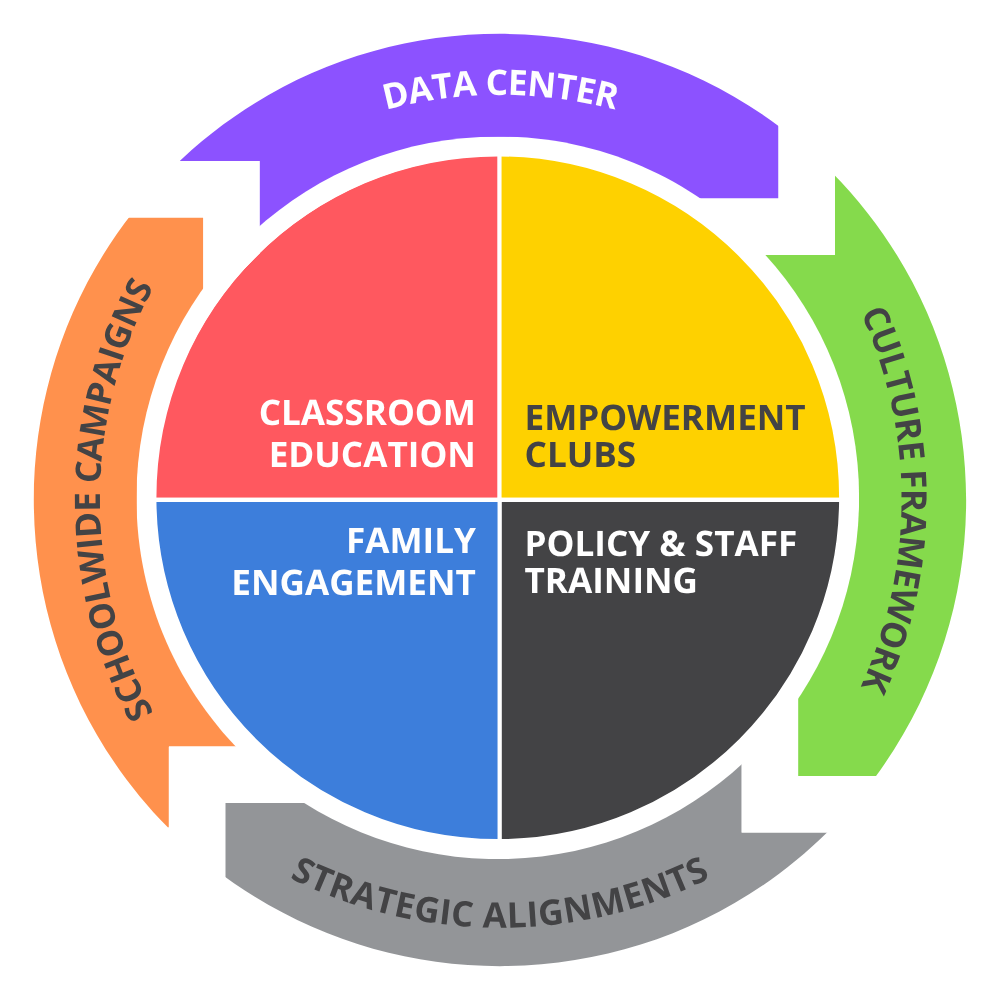
Educate students in grades 4-12 with age appropriate, evidence-informed, turn-key curriculum that resonates with every child.
Programs & resources include:
Ensure families have the values and vocabulary they need to have engaging and supportive mental health conversations at home.
Programs & resources include:
-
Conversation Guides
-
Good Mental Health Activities for home
-
Informational Handouts
-
and more…
Empower and engage students to be peer leaders through good mental health clubs in any school.
Programs & resources include:
-
Student Mental Health Academy for peer leadership education
-
$500 grants for official club activities
-
70+ turn-key activities
- Recruitment tools & ideas
Equip educators with the knowledge, vocabulary and values to support school-based mental health.
Programs & resources include:
-
Staff Training (30 min-2 hrs)
-
Staff Wellness Activities
-
Policy Recommendations
-
Best Practice Guidelines
Host schoolwide activities and campaigns that further promote good mental health, encourage help-seeking and normalize conversations.
Programs & resources include:
Access real-time data on the global impact of Erika's Lighthouse and the measurable outcomes its programs are having.
Programs & resources include:
-
Pre/Post Surveys for 6 programs
-
School Culture Survey
Erika's Lighthouse Program Model
Four Pillars

The Four Pillars promote an inclusive school culture and builds shared values and vocabulary across every demographic in a building: students, staff and families. Every school should integrate the Four Pillars into their MTSS Tier-1 mental health programming.
Wraparound Supports

Wraparound Supports enhance the Four Pillars by offering additional opportunities to establish an inclusive school culture, evaluate effectiveness, build values and vocabulary and identify complementary programs that work well within the MTSS framework.